Key Takeaways
- Patacones are twice-fried green plantains — a staple across Panama, Colombia, Costa Rica, and Ecuador. The name comes from an old Spanish coin: flat, round, and golden.
- Plantains were brought to the Americas during colonization, with roots in Southeast Asian agriculture and West African cuisine. They’re one of the most widely consumed foods on earth.
- They work as an appetizer, side dish, or base for toppings (guacamole, shrimp, stewed meat). The twice-fry method is what makes them crispy instead of chewy.
- The smashing step is non-negotiable. No smash, no patacon.

Plantains can be found in almost every grocery store in the produce section. Though living in Arizona, I’ve learned the size varies a lot depending on where you shop. In Panama we call them patacones. In Puerto Rico, Cuba, and the Dominican Republic they’re tostones. Different names, same irresistible result: crispy, salty, golden fried plantain that goes with basically everything. They’re my favorite plantain appetizer, full stop.
Where Do Patacones Come From?
The story of patacones spans three continents. Plantains originated in Southeast Asia, spread through Africa via trade routes, and arrived in the Americas with Spanish and Portuguese colonizers. But the cooking tradition frying plantains, smashing them flat, frying them again has roots in West African cuisine. Enslaved Africans brought their food knowledge to Latin America during the colonial period, and that knowledge became foundational to the food cultures of Panama, Colombia, Costa Rica, and beyond.
The name “patacón” actually comes from an old Spanish coin flat, round, and golden, which describes the fried plantain slice perfectly. As for why the same dish goes by “tostones” in some countries and “patacones” in others, it mostly follows geography. Panama, Colombia, Ecuador, and Costa Rica say patacones. Puerto Rico, Cuba, Honduras, and the Dominican Republic say tostones. Same dish, different side of the diaspora.
I mention this because it connects to something Kisha already wrote in the post about Chinese laborers building the Panama Canal staying on and influencing Panamanian cuisine. The food on our table is always a record of who was there and what they carried with them.
Patacones (twice-fried green plantains) have roots in West African culinary traditions, brought to Latin America during the colonial period. The name comes from an old Spanish coin flat and round like the fried slices. The dish appears across the Caribbean and Latin America under different names: tostones in Puerto Rico and Cuba, patacones in Panama and Colombia. (Wikipedia: Tostones)
What Pairs Well with Patacones?
There’s no wrong answer here. In Panama, patacones are typically served as a side alongside stewed meat carne guisada (beef stewed in tomato sauce), salchichas guisadas (stewed hot dogs), or ropa vieja are all classic pairings. Eating the patacones soaked in the stew sauce is genuinely the best part. Check out my full guide to Panamanian food for more ideas on what to serve alongside them.
What Is a Great Way to Serve Green Plantains?
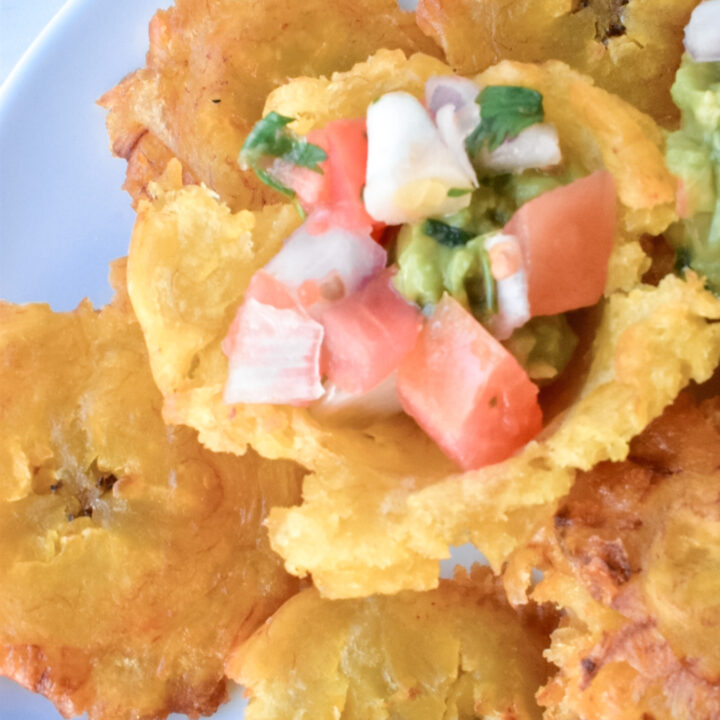
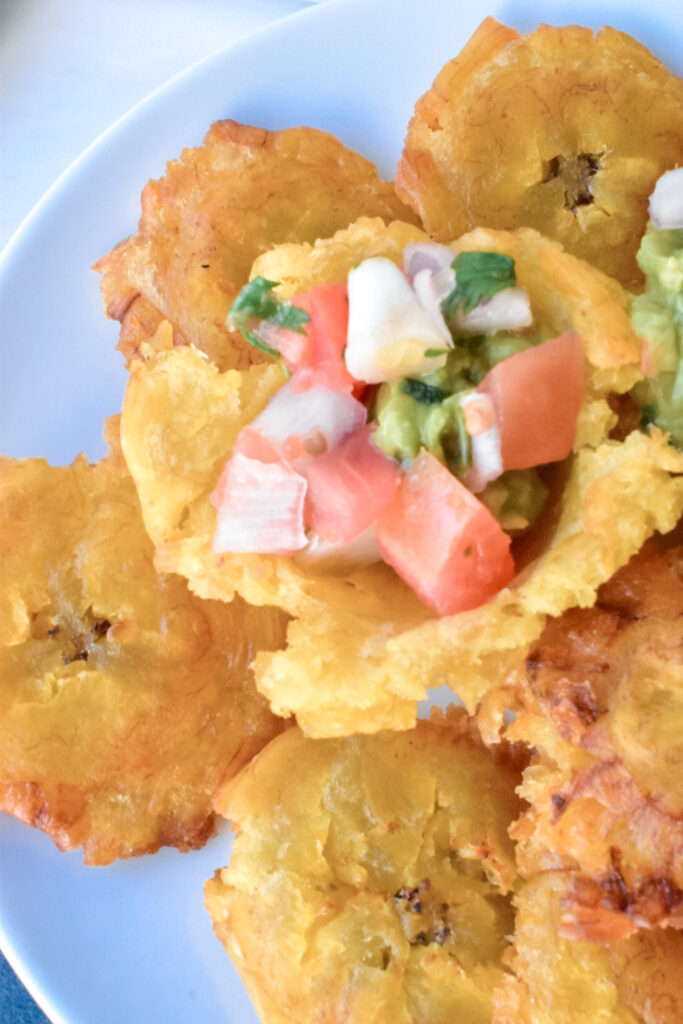
If you want to take patacones further, try patacones rellenos — stuffed plantain cups. After the first fry, instead of just smashing the plantain flat, you press it into a cup shape (a small bowl works as a mold). Fry it again to hold the shape, then fill it with whatever you like: guacamole, shrimp, black beans, pulled pork. It turns an already-great side dish into something that looks like it came from a restaurant. Great for hosting.
What’s the Difference Between Green and Yellow Plantains?
This comes up a lot, and it matters for this recipe. Patacones use green, unripe plantains — they’re starchy, firm, and hold up to double frying without falling apart. They taste savory, almost like a potato. Yellow plantains are ripe and much sweeter — they caramelize when fried and are used for maduros or desserts. For this recipe, go green. A yellow plantain will not give you a patacon.
How Do You Prepare Patacones?
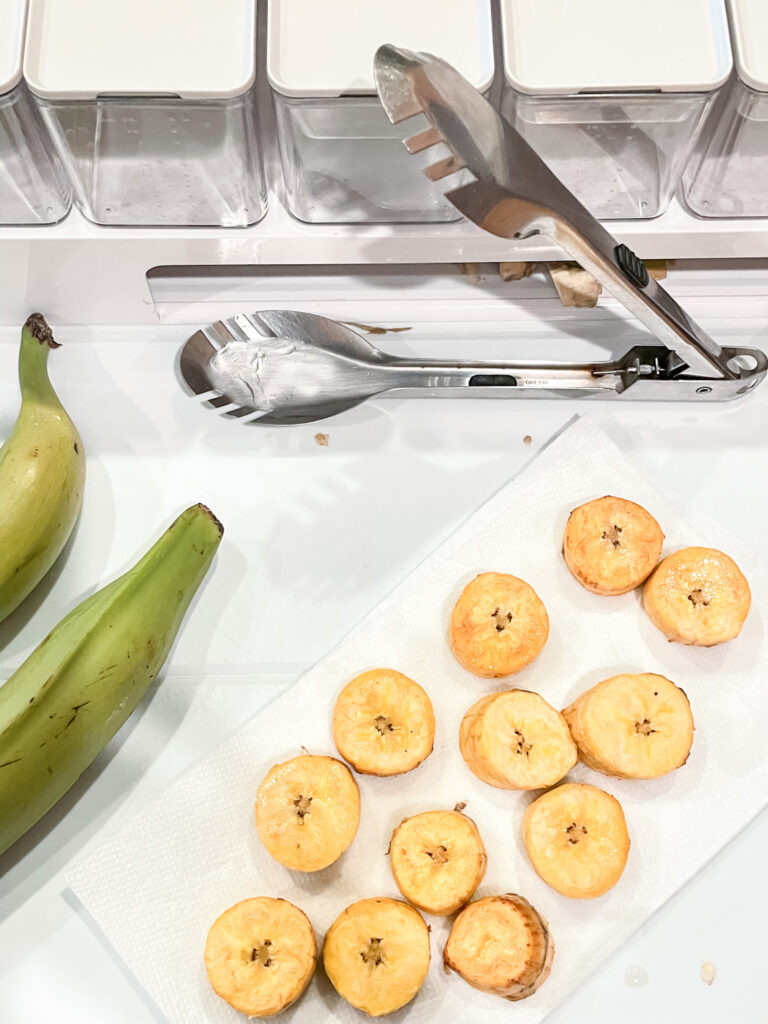
Cut off both ends, score the peel lengthwise, and remove it. Cut the plantain into half-inch slices at a slight angle. Fry in medium-high heat oil for 3-4 minutes per side until lightly golden they don’t need to be fully cooked yet. Remove and drain on paper towels. While still warm, smash each slice flat using a plantain smasher, a flat-bottomed glass, or (Kisha’s move) a cleaned hot sauce bottle. The smashing is what creates the texture. Then back into the oil they go for round two, until crispy and golden. Salt immediately while hot.
Patacones
Patacones (unripe green banana) is a plantain that is fried, smashed, and then fried again.
Ingredients
- Green plantains
- Vegetable oil
- Salt
Instructions
- Cut off both ends of the plantain and cut a slit down the length of the peel. Remove the peel of the plantain.
- Cut the plantains into 1/2-inch slices.
- Heat 1/2 inch of oil in a skillet on medium-high heat.
- Add your sliced plantains to the hot oil.
- Fry for about 3-4 minutes per side.
- Once they have started to brown remove the plantain from the heat and place them on a plate lined with paper towels to absorb excess oil.
- Once cooled, use a plantain smasher or cup with a flat bottom to squish the plantain. I personally use a hot sauce bottle that I have cleaned.
- Place the smashed plantains back into the oil, occasionally flipping to cook both sides, until patacones are crispy and golden. Turn down the heat if you notice they're burning.
- Add salt to taste and serve.
Notes
If the plantains aren't fried long enough the first time they might fall apart when smashing
If you don't let the plantain cool enough before smashing it might stick to whatever you are smashing it with.
Nutrition Information
Yield 3 Serving Size 3-4 plantainsAmount Per Serving Calories 325
Frequently Asked Questions About Patacones
They’re the same dish, twice-fried green plantains. The name depends on where you are. In Panama, Colombia, Ecuador, and Costa Rica they’re called patacones. In Puerto Rico, Cuba, Honduras, and the Dominican Republic they’re tostones. Same technique, same result, different side of the diaspora.
You can, but the texture won’t be the same. Baked patacones tend to be chewy rather than crispy. If you want to reduce oil, air-frying is a better option preheat to 400F, brush lightly with oil, air-fry the smashed plantains for about 10-12 minutes, flipping halfway. They won’t be identical to the fried version, but they get close.
Serve them immediately. Patacones lose their crunch fast. If you’re making them for a group, you can do the first fry and smashing step ahead of time, then do the second fry right before serving. Don’t stack them, lay them flat on a wire rack so air can circulate and they don’t steam each other soggy
Any neutral oil with a high smoke point works well vegetable oil, canola oil, or avocado oil. Olive oil can work but its lower smoke point means you need to be careful about heat. Some Panamanian cooks prefer coconut oil for the faint tropical flavor it adds, especially if the patacones are being served with seafood
No, at least not traditional patacones. Sweet yellow plantains are too soft and sugary for the twice-fry method. They’ll fall apart. Yellow plantains are better for maduros (sweet fried plantains) or desserts. For patacones, always use green, unripe plantains
If you’re making a full Panamanian spread, pair these with beef empanadas or serve them alongside arroz con guandu y coco. They go with everything.



[…] State’s only Panamanian eatery, they are proud to introduce you to mouthwatering Sancocho, crispy Patacon, savory Yuca Frita, and delectable Pargo Frito. Driven by Panamanian roots and a deep love for […]