This post contains affiliate links. As an Amazon Influencer, I earn from qualifying purchases at no extra cost to you.
Key Takeaways
- Hojaldra is traditional Panamanian fried bread — one of the country’s most beloved breakfast staples, made from just five pantry ingredients you almost certainly already have.
- Similar fried breads exist across Latin America: Argentina’s torta frita, Chile’s sopaipilla, Peru’s cachanga. Different names, same concept — dough, oil, heat.
- It can go sweet (powdered sugar, cinnamon-sugar) or savory (stewed hot dogs, fried egg, cheese). Most Panamanians eat it both ways depending on the morning.
- The 20-minute rest after mixing is not optional. It’s what makes the dough stretch without tearing.

Being able to share my culture with all of you has been one of the most rewarding parts of this blog. I share a lot on social media, but when it comes to food I’ve held back, mostly because I cook by feel. I rarely know exact measurements. I season to taste and stop when the ancestors tell me to. But hojaldra is the one recipe I make so often that I actually had to write it down.
This fried dough is one of the easiest things I make, and it’s almost always what I reach for on a slow morning when everyone’s still waking up and nobody’s in a rush.
What Is Hojaldra?
Hojaldra — pronounced roughly “oh-HAHL-dra,” though every Panamanian says it slightly differently and nobody’s wrong — is the Panamanian version of fried dough. It’s crispy on the outside, airy in the middle, and typically about 4-6 inches across. Not quite a beignet, not quite a fritter. Its own thing entirely.
Panama isn’t the only country with a version of this. In Argentina and Uruguay, the same concept is called torta frita. In Chile, it’s sopaipilla. In Peru, cachanga. Across the world, people have been frying simple doughs for centuries — it’s one of those cooking traditions that shows up independently in cultures with very little in common, because flour, water, and hot oil are universal. What makes the Panamanian version distinct is in the seasoning and the technique passed down through families. My version comes from watching my mom and my tias in the kitchen, even when they shooed me out.
Hojaldra is among the most popular traditional breads in Panama, typically eaten at breakfast and sold as street food. Similar fried breads appear across Latin America under different names — torta frita in Argentina and Uruguay, sopaipilla in Chile, and cachanga in Peru — reflecting a widespread tradition of simple fried dough across the continent. (196 Flavors)
What Ingredients Do You Need to Make Hojaldra?
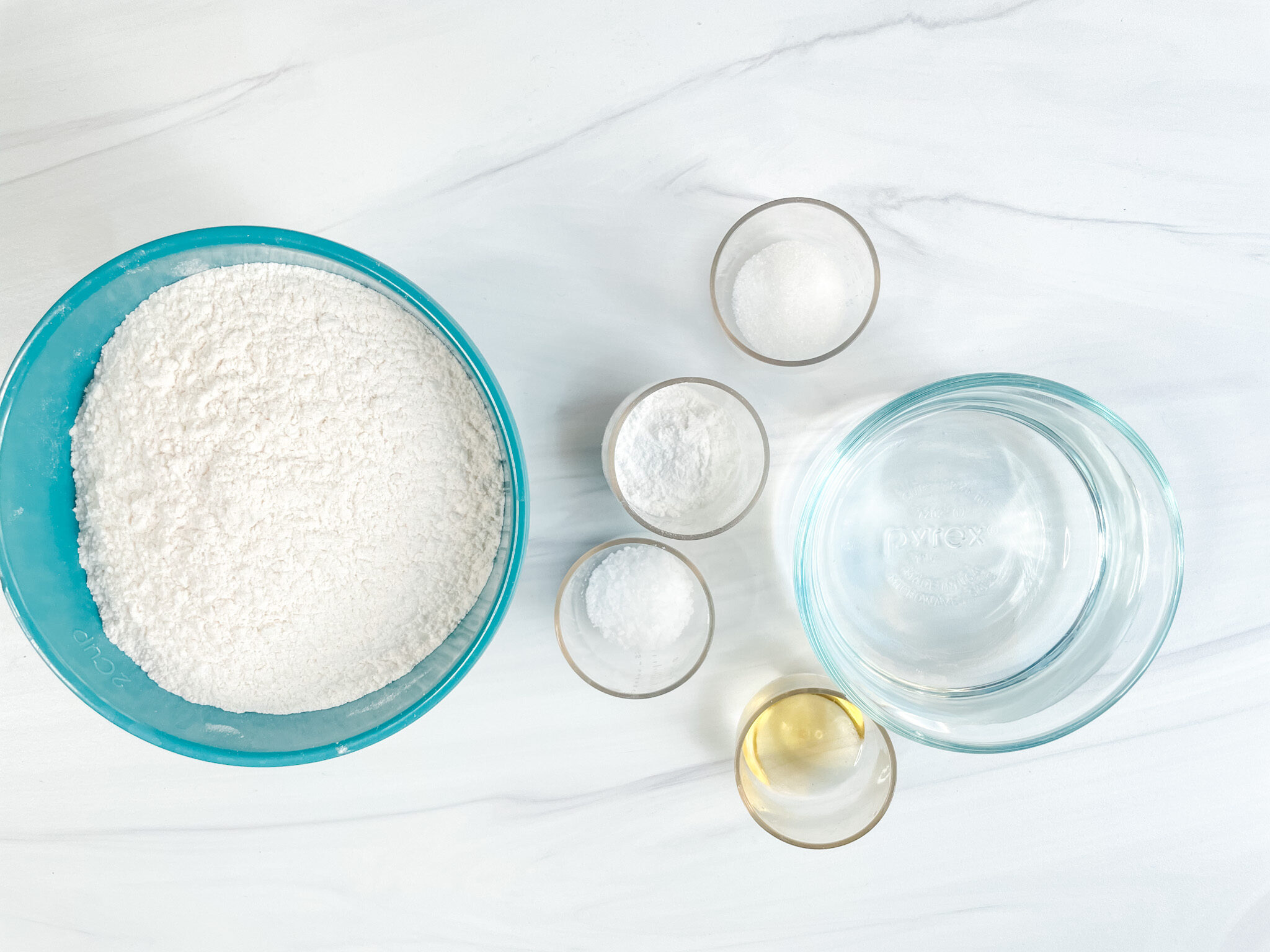
This is the best part: five ingredients, all pantry staples.
- Flour
- Salt
- Baking powder
- Oil (a small amount in the dough, plus more for frying)
- Water
Some people add an egg to the dough for a richer texture. Some add a teaspoon of sugar. The base recipe is flexible — this is a dish that’s been made by memory for generations, not measured by tablespoon. Start with the recipe below and adjust from there to match what your family likes.
What Can You Eat Hojaldra With?
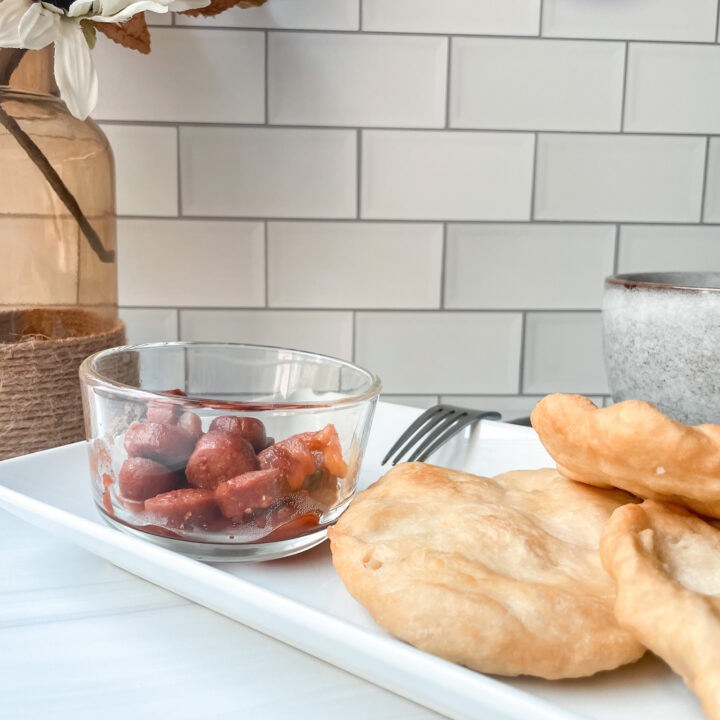
The classic Panamanian breakfast plate is hojaldra with salchichas guisadas — stewed hot dogs cooked in a tomato-based sauce. It sounds simple and it is. It’s also exactly right. Other good pairings: a fried egg, white cheese (queso blanco), or just powdered sugar if you want something sweet. Some people do a cinnamon-sugar mix on top. My honest answer is that plain hojaldra, eaten immediately out of the pan while it’s still hot, needs nothing.
If you haven’t read my post on Panamanian food, this recipe is a good entry point into the cuisine. It pairs naturally with arroz con guandu y coco if you’re building a full Panamanian breakfast spread — though in my family, hojaldra shows up at any meal that needs something warm and fried on the table.
Tips for Getting the Dough Right
The 20-minute rest is the step people skip and shouldn’t. After you mix the dough and form it into a ball, put a clean towel over the bowl and leave it alone. This lets the gluten relax so the dough stretches thin without springing back or tearing. Rush this step and the dough will fight you every time you try to pull it flat.
When you’re ready to fry: the oil needs to be genuinely hot before the dough goes in. Test it with a small piece of dough, if it sizzles immediately and floats to the surface, the temperature is right. Too cool and the hojaldra absorbs oil instead of crisping. Too hot and the outside burns before the inside cooks through. Medium heat, patient frying.
Panamanian Hojaldra
Hojaldra is a traditional Panamanian fried dough made from a few simple ingredients
Ingredients
- 2 cups flour
- 1 tsp. salt
- 1 tsp. sugar
- 2 tsp. baking powder
- 1 tsp. oil
- 3/4 cup of water
Instructions
- In a medium-sized mixing bowl pour in the flour, sugar, baking powder, salt, oil, and water.
- Mix everything with your hands for about 5 minutes.
- Next move the dough mixture to a clean surface, I used a cutting board just to keep my counters clean. Keep kneading the dough until it is smooth.
- Roll it into a dough ball and put it back in the mixing bowl.
- Put a clean towel over the bowl and let it sit for about 20 minutes (or longer if you like)
- Next, pour enough oil into a skillet and let it get hot
- Grab a decent size piece of the dough depending on how big you want it and stretch it out evenly.
- place it gently into the oil and let it cook for about 3 minutes on each side. You should be able to eyeball it to see how dark it's getting. Make sure it doesn't burn.
- Take it out and let it drain on a paper towel. Enjoy!
Notes
- we typically eat it with sauted hot dogs, a fried egg, or cheese for breakfast
- some people like to put an egg in the ingredients before mixing
- can be eaten plain, for breakfast, or with powdered sugar!
Nutrition Information
Yield 6 Serving Size 1Amount Per Serving Calories 162Total Fat 1gSaturated Fat 0gTrans Fat 0gUnsaturated Fat 1gCholesterol 0mgSodium 552mgCarbohydrates 33gFiber 1gSugar 1gProtein 4g
Frequently Asked Questions About Hojaldra
The honest answer is: however your family says it. In Panama you’ll hear “oh-HAHL-dra,” “oh-HAHL-dras,” and variations in between. It’s also spelled hojaldras, hojaldres, or hojaldas depending on the region and who’s writing it down. Don’t get too attached to one spelling.
Yes. Make the dough, form it into a ball, wrap it in plastic wrap, and refrigerate for up to 24 hours. Let it come to room temperature for about 15 minutes before stretching and frying. Some people find the rested dough is actually easier to work with and produces a slightly chewier texture inside.
Two likely culprits: old baking powder or oil that wasn’t hot enough. Baking powder loses potency over time, if yours has been in the pantry for more than a year, test it by dropping a teaspoon in hot water. If it doesn’t bubble vigorously, replace it. And make sure your oil is fully up to temperature before the dough goes in. Dense, flat hojaldra is almost always an oil temperature problem.
Technically yes, but the result is different. Fried hojaldra puffs and blisters in oil in a way that an air fryer can’t replicate. You’ll get something cooked and edible, but it won’t have the same texture. If you’re committed to no frying, sopaipilla recipes (Chile’s version) have some oven adaptations that might give you better results.
Store in an airtight container at room temperature for up to 2 days. Reheat in a dry skillet over medium heat for about 1-2 minutes per side this brings the crispiness back better than a microwave, which makes it chewy. Hojaldra is best fresh but it reheats reasonably well.



Great recipe! Tastes just like the ones we get at the stand in front of the hospital in Sona. I like fried egg and cheese on mine but my wife prefers Panamanian style liver with hers. I will cut out a little of the salt next time. It’s perfect if you eat them on their own but it was a little salty when eating it with something. I will make this again, thanks for the great recipe and keep up the good work of bringing Panamanian cuisine to the states.